
Acupuncture & Neurological Rehabilitation
Recovering after a stroke, concussion or other neurological event can be a complex and highly individual journey.
For people who are medically stable and already receiving appropriate medical or rehabilitation care, acupuncture may be considered as an additional complementary approach.
At Warrnambool Acupuncture and Chinese Medicine, Andrew takes the time to understand your health history, current rehabilitation, medications, functional needs and personal goals before deciding whether acupuncture is appropriate for you.

Interested in finding out whether acupuncture may be suitable for you?
Contact the clinic to discuss your circumstances with Andrew.
Andrew’s Neurological Acupuncture Training
Andrew Mulkearns is an AHPRA-registered Chinese Medicine Practitioner and registered acupuncturist. He brings more than 20 years of healthcare experience to his practice, including nine years working in emergency nursing.
In September 2026, Andrew completed the 3-Day Nanopuncture - Stroke Foundation and Concussion Strategy in Melbourne with Dr Clayton Shiu.
Andrew was part of the inaugural Australian cohort, making him one of the first Australian practitioners to complete Dr Shiu’s Stroke Foundations training.
The professional development program explored acupuncture approaches used in the context of stroke, concussion and neurological rehabilitation, including:
Neuroanatomy and neurological considerations
Functional observations
Stroke and concussion presentations
Clinical case discussions
Supervised acupuncture techniques
Principles of Xing Nao Kai Qiao (XNKQ).
This additional professional development builds on Andrew's existing acupuncture qualifications and healthcare experience and informs his approach when considering acupuncture for people undertaking neurological rehabilitation.
It does not represent specialist registration or a medical qualification in neurology, stroke rehabilitation or concussion management.
Note: “Stroke Foundation” is the course provider's training terminology and does not refer to training provided or endorsed by Stroke Foundation Australia.
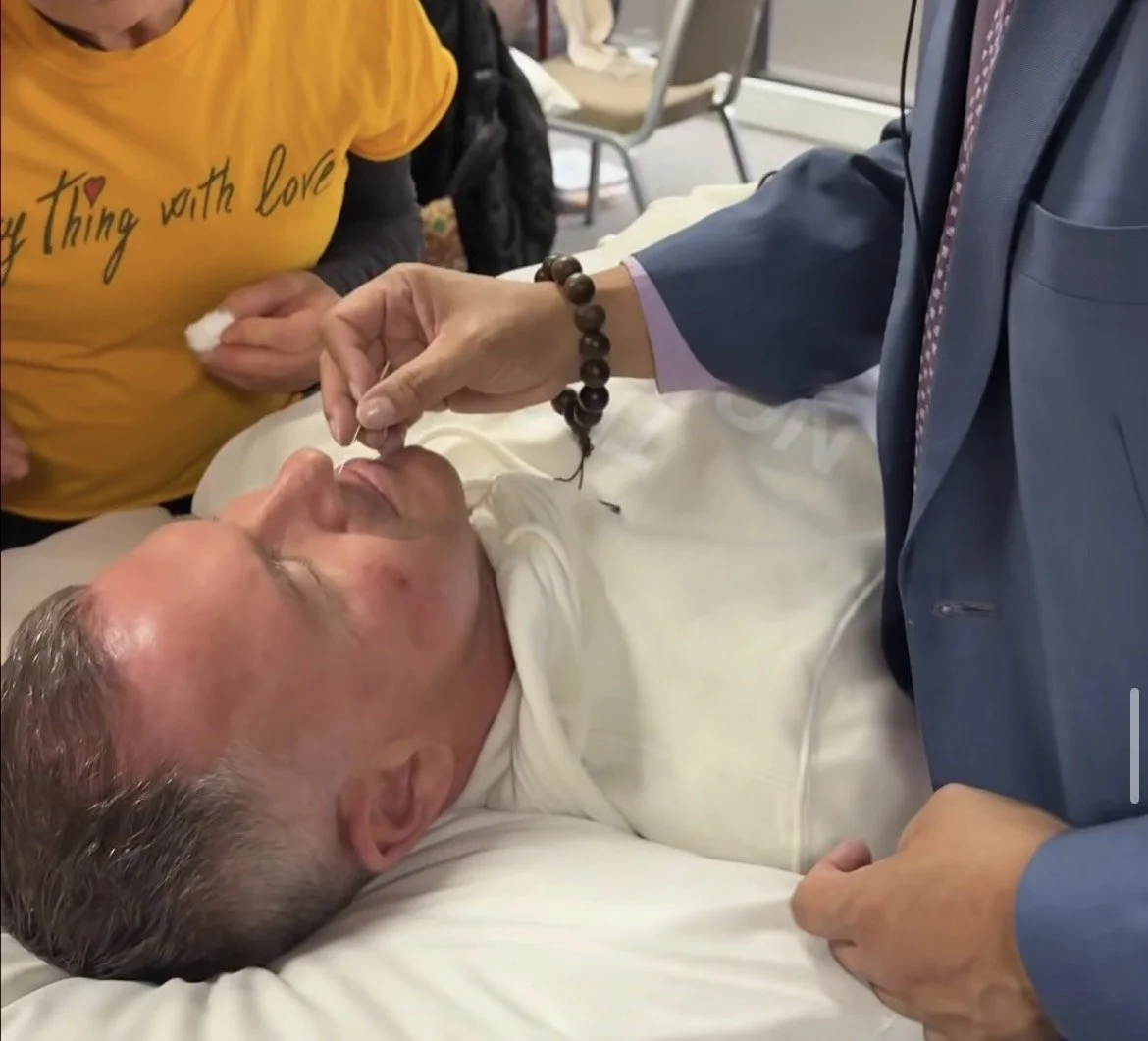
Andrew experiencing Dr Clayton Shiu’s acupuncture techniques firsthand during the 2026 Nanopuncture – Stroke Foundation and Concussion Strategy training in Melbourne.
What is Xing Nao Kai Qiao?
Xing Nao Kai Qiao (醒脑开窍), commonly abbreviated to XNKQ, is an acupuncture framework associated with the Tianjin school of acupuncture in China.
It has historically been used within Chinese medicine approaches to neurological rehabilitation and differs from general acupuncture approaches in its point selection, treatment sequence and needling methods.
Where appropriate, principles from this training may inform an individual acupuncture treatment plan.
Having a neurological condition does not automatically mean that acupuncture or XNKQ will be appropriate for you.
Important Information About Your Care
-
Stroke is a medical emergency. If you suspect a stroke, call 000 immediately.
Acupuncture is not an alternative to emergency treatment or multidisciplinary stroke rehabilitation.
Once a person has been medically assessed, is stable and is receiving appropriate care, they may discuss whether acupuncture is suitable as an optional addition to their existing rehabilitation.
Before treatment, Andrew will consider your medical history, current condition, medications, bleeding risk, rehabilitation program, mobility, communication needs and any relevant medical precautions.
Communication with, or clearance from, your treating healthcare team may also be recommended where appropriate.
-
Concussion is a traumatic brain injury and requires appropriate medical assessment and management.
Acupuncture should never be used instead of medical assessment following a head injury.
If you have already been medically assessed and your condition is stable, you can discuss whether acupuncture may be appropriate alongside your existing care.
New, unexplained or worsening neurological symptoms require medical assessment rather than acupuncture treatment.
-
Your first appointment allows additional time to understand your health history and determine whether acupuncture is appropriate.
Andrew may discuss:
your neurological event or injury
relevant diagnoses and investigations
current and previous symptoms
medications and supplements
rehabilitation and other healthcare
mobility and functional limitations
relevant risks or precautions
your goals for care.
Simple observations of movement, balance, coordination or eye movements may also be included where appropriate.
These observations can help inform acupuncture care but do not constitute a medical or neurological diagnosis.
If acupuncture is appropriate, Andrew will explain the proposed treatment, relevant risks, alternatives and limitations before obtaining your consent.
-
Acupuncture is provided as a complementary health service and is intended to sit alongside appropriate medical and rehabilitation care.
Continue any treatment or rehabilitation recommended by your healthcare professionals and do not stop or change prescribed medication without discussing this with the healthcare professional responsible for your care.
With your consent, Andrew can communicate with members of your treating healthcare team where clinically appropriate.
-
Andrew uses single-use sterile acupuncture needles.
Temporary effects can include soreness, bruising, minor bleeding, tiredness or light-headedness. Other less common risks will be discussed where relevant.
Please let Andrew know if you:
take anticoagulant or antiplatelet medication
have a bleeding disorder
have epilepsy or a history of seizures
are pregnant
have an implanted medical device
have recently undergone surgery or another medical procedure
have experienced a recent change in neurological symptoms.
Responses to acupuncture vary between individuals and a particular outcome cannot be predicted or guaranteed.
-
Call 000 immediately if you or someone with you develops symptoms of a possible stroke or serious neurological event, including:
facial drooping
arm weakness
difficulty speaking or understanding speech
sudden weakness, numbness or confusion
a sudden severe headache
seizure, collapse or loss of consciousness.
Following a head injury, worsening headache, repeated vomiting, increasing confusion, unusual drowsiness, slurred speech, unequal pupils, seizure or loss of consciousness also requires urgent medical attention.
Do not wait for an acupuncture appointment if urgent medical assessment is required.
⚠ Suspected Stroke or Neurological Emergency? Call 000
Call 000 immediately
If you or someone with you suddenly experiences facial drooping, weakness in one arm, difficulty speaking or understanding speech, new weakness or numbness, severe or unusual headache, seizure, collapse or loss of consciousness.
Following a head injury, call 000 for worsening headache, repeated vomiting, increasing confusion, unusual drowsiness, slurred speech, unequal pupils, seizure or loss of consciousness.
Do not wait for an acupuncture appointment.
Acupuncture is not emergency care and must never delay urgent medical assessment or treatment.
Interested in discussing acupuncture?
Because neurological presentations can involve complex medical histories and existing rehabilitation programs, these appointments are not available for online self-booking.
Contact Warrnambool Acupuncture and Chinese Medicine to discuss your circumstances and arrange an appropriate appointment with Andrew.